
Hair loss is a condition that affects millions of people worldwide, with both men and women experiencing varying degrees of thinning or baldness. Throughout history, the struggle to restore hair has sparked numerous innovations and developments in the field of hair restoration. From ancient remedies to modern surgical techniques, the evolution of hair transplant surgery is a fascinating journey. In this article, we will explore the history of hair transplantation, from its earliest origins to the advanced techniques that exist today.
Ancient remedies and concepts of hair restoration

Hair loss is by no means a modern problem. The earliest recorded attempts at hair restoration date back to ancient civilizations. In ancient Egypt, Greece, and Rome, people sought solutions to hair loss through natural remedies. Ancient Egyptians, for example, used a variety of oils and herbal concoctions to stimulate hair growth. While these treatments may have provided minimal results, they laid the foundation for the idea of improving hair health and regrowth.
In ancient Greece, philosophers such as Hippocrates mentioned hair loss in their medical texts. One of the earliest known attempts to treat baldness involved the use of animal fats, herbs, and other natural substances to enhance hair growth. While there is no concrete evidence that these methods were successful, they represented early attempts to address the problem of hair loss.
The concept of hair restoration also found its way into Roman society, where men used powdered wigs to conceal their baldness. Wigs and hairpieces became a popular solution, providing a temporary fix for those suffering from hair loss. However, these options were often uncomfortable and cumbersome, and there was little innovation beyond cosmetic fixes.
The early 20th century: The beginning of modern hair transplants
The modern history of hair transplant surgery begins in the early 20th century. While hair loss was a prevalent issue, it wasn’t until the development of modern surgical techniques that hair restoration became more accessible and effective.
One of the most important milestones in the history of hair transplantation occurred in 1939 when Dr. Norman Orentreich, a pioneering American dermatologist, conducted the first successful hair transplant. Dr. Orentreich’s breakthrough came with the concept of “donor dominance,” which explained that hair taken from the back of the head (the donor area) would retain its characteristics even when transplanted to a bald area (the recipient site). This discovery laid the foundation for modern hair transplant procedures.
Dr. Orentreich’s technique involved removing small plugs of hair from the donor area and transplanting them into areas suffering from baldness. Although this early method was rudimentary by today’s standards, it represented a significant step forward in the science of hair restoration. It wasn’t long before this technique began to gain popularity, especially among men experiencing male-pattern baldness.
The 1950s-1960s: The evolution of hair transplant techniques

During the 1950s and 1960s, the field of hair restoration began to see improvements in surgical techniques. Dr. Orentreich’s initial technique of using hair plugs, known as “punch grafts,” was refined by other dermatologists and surgeons. These punch grafts involved the removal of small circular sections of skin containing hair follicles, which were then transplanted into areas of thinning or baldness.
While this method marked progress, it still had limitations. The use of large punch grafts often resulted in an unnatural appearance, with hair growing in small, rounded clumps that were easily noticeable. Additionally, the recovery time for patients was relatively long, and the results were often less than ideal in terms of naturalness.
In the 1960s, a breakthrough in hair transplantation came with the introduction of smaller grafts. Instead of removing large sections of skin, surgeons began to experiment with smaller grafts containing fewer hair follicles. This approach allowed for more precise and aesthetically pleasing results, although it still lacked the refinement of modern methods.
The 1980s: The introduction of micrografting and minigrafts
The 1980s marked a significant turning point in the history of hair transplants with the introduction of micrografting and minigrafts. Micrografting involved the use of tiny grafts, often containing just one or two hair follicles, which were transplanted into the recipient area. This method allowed for more natural-looking results, as the transplanted hair grew in a more natural pattern and density.
Minigrafts, on the other hand, involved slightly larger grafts, typically containing three to five hair follicles. These grafts were also used to create more natural-looking hairlines and coverage for larger areas of baldness. The refinement of these techniques was made possible by advancements in surgical tools and the development of more sophisticated methods of harvesting and transplanting hair follicles.
By the end of the 1980s, hair transplant surgery had come a long way from its humble beginnings. However, challenges remained, particularly in the areas of scarring and unnatural hairlines. Surgeons continued to refine their techniques in an effort to achieve even more natural results.
The 1990s: Follicular Unit Transplantation (FUT)
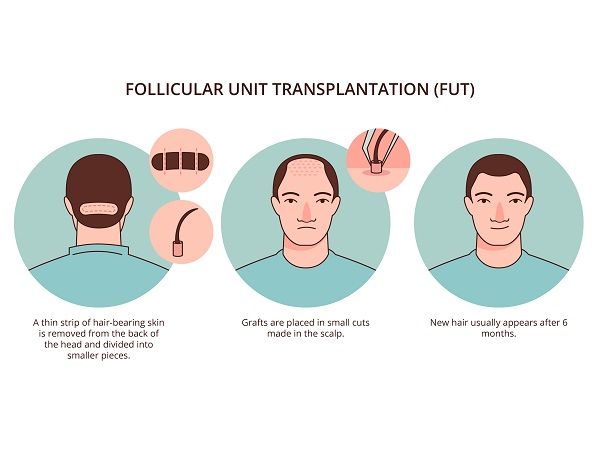
In the 1990s, the hair transplant industry experienced a major breakthrough with the introduction of follicular unit transplantation (FUT). This technique revolutionized the field of hair restoration by using naturally occurring follicular units—groups of one to four hair follicles that grow together—as the basic unit for transplantation.
The FUT technique involved the removal of a thin strip of skin from the donor area, which was then dissected into individual follicular units. These units were then carefully transplanted into the recipient area. This approach allowed for a much more natural appearance, as it replicated the way hair grows naturally in small groups rather than large plugs.
The introduction of FUT also addressed the issue of scarring, as the strip of skin was harvested from the donor area in a way that allowed for a more precise and less noticeable scar. The technique significantly improved the aesthetics of hair transplants, making the results more natural and less detectable.
The 2000s: Follicular Unit Extraction (FUE)
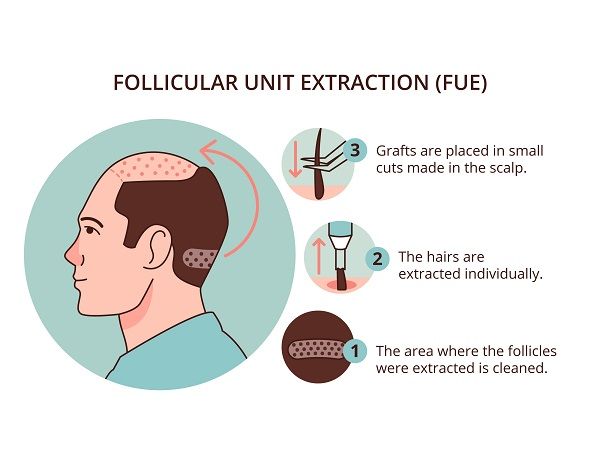
As hair transplant techniques continued to evolve, a new method called follicular unit extraction (FUE) was developed in the early 2000s. Unlike FUT, which involves removing a strip of skin from the donor area, FUE involves the extraction of individual hair follicles directly from the scalp using a specialized punch tool.
FUE offered several advantages over FUT, most notably the reduction in scarring. Since individual hair follicles were extracted, there was no need for a linear incision, which significantly reduced the appearance of scarring. The FUE method also allowed for greater flexibility in the placement of hair follicles, enabling surgeons to work on areas with different densities of hair loss.
The popularity of FUE grew rapidly in the 2000s, as it became clear that this technique provided a less invasive and more natural-looking solution to hair loss. Patients experienced shorter recovery times and fewer complications, making FUE a preferred choice for many individuals seeking hair restoration.
The present and future of hair transplants
Today, hair transplantation has reached a level of sophistication that was unimaginable just a few decades ago. Both FUT and FUE techniques have continued to improve, with refined tools and technology allowing for even more precise and natural-looking results.
In recent years, the advent of robotic-assisted hair transplant systems has further improved the precision and efficiency of FUE. Robotic systems, such as the ARTAS robot, use advanced imaging and algorithms to guide the surgeon in harvesting and transplanting hair follicles, offering a higher level of accuracy and consistency.
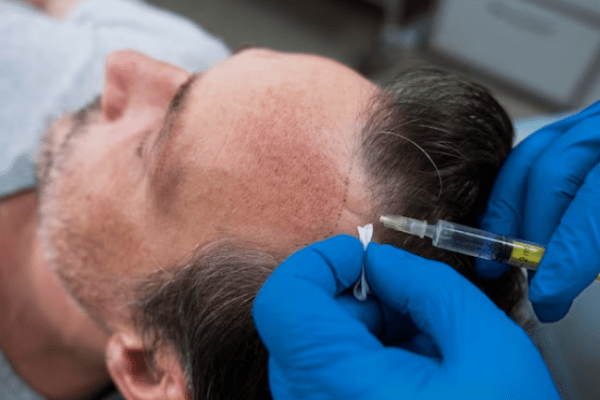
Additionally, stem cell research and platelet-rich plasma (PRP) therapy have emerged as promising adjuncts to hair restoration treatments. PRP therapy involves the injection of a patient’s own plasma into the scalp to stimulate hair growth, while stem cell research holds the potential to regenerate hair follicles and improve the overall effectiveness of hair restoration procedures.
As we look to the future, hair restoration technology will likely continue to evolve. With advances in genetic engineering, stem cell therapy, and regenerative medicine, the possibilities for reversing hair loss and achieving even more natural results are limitless.
Conclusion
The history of hair transplants is a testament to human ingenuity and the desire to overcome the challenges of hair loss. From ancient remedies to cutting-edge surgical techniques, the evolution of hair transplant surgery has been marked by continuous innovation and improvement. Today, individuals suffering from hair loss have access to a range of effective, minimally invasive options that can restore both hair and confidence. As research and technology continue to advance, the future of hair transplantation holds exciting possibilities, offering hope for even more natural and effective treatments for hair loss.