
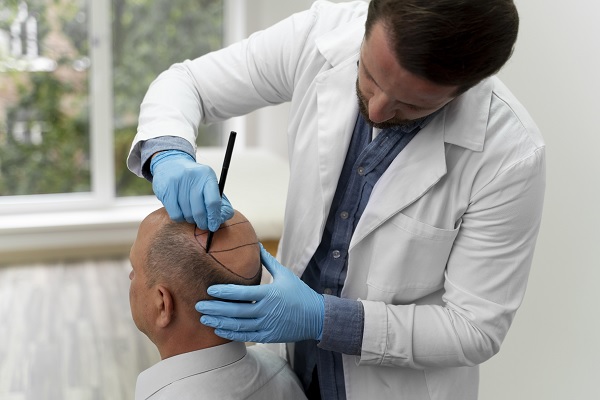
A perfect hair transplant remains invisible to the naked eye because of masterful hairline design. Consequently, the transition between forehead and hair determines the ultimate success of any restoration. Furthermore, achieving a balanced look requires a deep understanding of facial proportions and artistic vision. This guide explores those critical details.
Every face tells a unique story through its features and contours. Therefore, a generic approach to hair restoration often fails to provide a natural result. In addition, surgeons must consider future aging patterns during the initial planning phase. Discover why the architecture of the front row is the most important element.
The fundamental principles of artistic hairline design
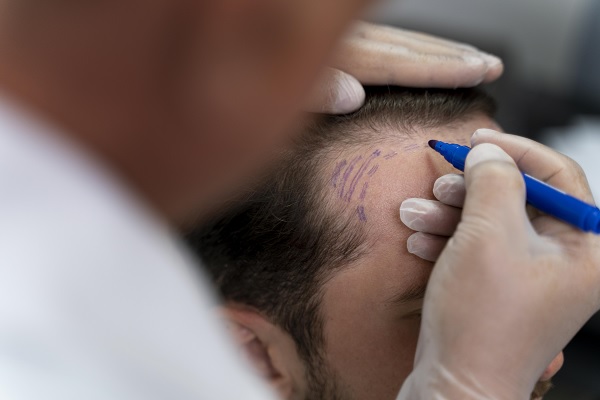
The creation of a new frontal boundary is much more than a simple medical procedure. Instead, it is a delicate form of living sculpture. Consequently, expert hairline design must account for the unique curvature of the patient’s skull. Furthermore, the surgeon must visualize how the hair will fall in different lighting conditions.
A natural hairline design is never a perfectly straight line. In nature, the front edge contains subtle irregularities and macro-irregularities. Therefore, mimicry of these patterns is essential for an authentic appearance. If the line is too straight, it often looks like a wig or a synthetic doll.
-
Macro-irregularities: These are the larger waves and indentations across the forehead.
-
Micro-irregularities: These involve the tiny zig-zag patterns of individual follicular units.
-
Transition zones: This area uses single hairs to create a soft, feathered look.
-
Density gradients: The hair should gradually become thicker as it moves toward the back.
Furthermore, hairline design must respect the patient’s age and ethnicity. A youthful, low hairline might look strange on a man in his sixties. Consequently, surgeons often suggest a more mature placement to ensure long-term aesthetic harmony. This foresight is what separates masters from average practitioners in the field.
Understanding frontal hairline anatomy for better results
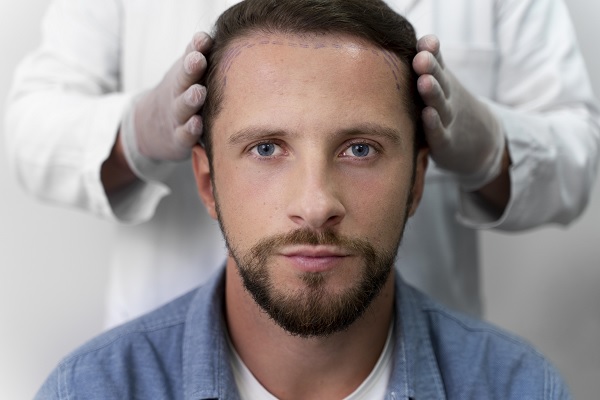
Before making any incisions, a specialist must analyze the underlying frontal hairline anatomy. This includes identifying the location of the frontalis muscle. Furthermore, placing hair too low on the moving forehead muscle can cause an unnatural look. Therefore, precise measurements are taken from the glabella to the hair starting point.
The facial thirds rule is a standard tool in hairline restoration aesthetics. Ideally, the forehead, nose, and chin should occupy equal vertical space. However, every individual has slight variations that require artistic adjustments. Consequently, the surgeon uses these proportions as a guide rather than a strict, unbreakable law.
In addition, frontal hairline anatomy involves understanding the “temporal peaks” at the sides. These peaks frame the eyes and provide a masculine or feminine contour. If these are ignored, the face can appear overly wide or unbalanced. Therefore, integrating the sides with the front is vital for a cohesive result.
The role of hairline restoration aesthetics in modern surgery
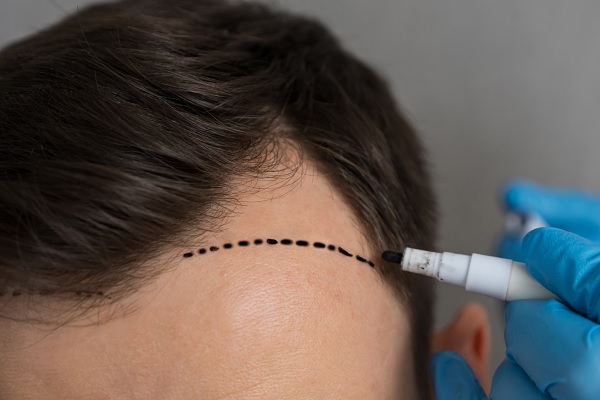
Modern patients demand results that can withstand the closest scrutiny. Consequently, hairline restoration aesthetics have evolved to include complex feathering techniques. This involves using only the finest single-hair grafts for the very first row. Furthermore, these hairs must be angled forward at a very shallow degree.
When we discuss hairline design, we are really discussing the restoration of a person’s identity. A receding hairline correction can take years off a patient’s appearance. However, the goal is never to create a “perfect” line. Instead, the goal is to create a believable and attractive frame for the face.
-
Symmetry versus Balance: Perfect symmetry often looks fake in biological systems.
-
Graft Selection: Using soft, fine hairs for the transition zone is crucial.
-
Directional Flow: Hairs must follow the natural swirl and direction of the scalp.
-
Scalp Contrast: Dark hair on light skin requires even more delicate placement techniques.
Furthermore, hairline restoration aesthetics must account for the density of the donor area. It is important not to over-harvest while trying to achieve a thick look. Consequently, a strategic distribution of grafts is necessary to provide the illusion of fullness. This balance between supply and demand is a core part of the planning process.
Technical precision in FUE hair transplant hairline creation
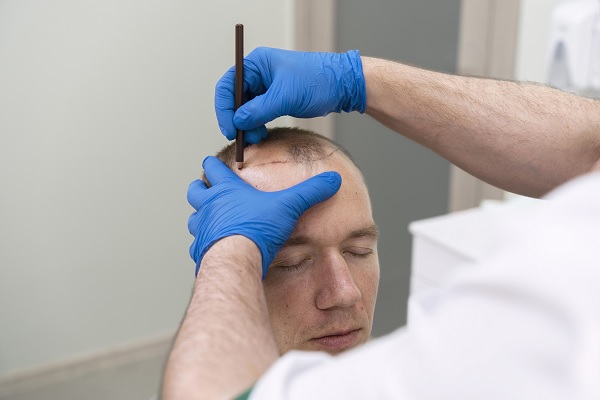
The FUE hair transplant hairline technique allows for incredible precision during the extraction phase. Because individual follicles are removed, the surgeon can select the best hairs for the front. Furthermore, this method leaves minimal scarring in the donor area. Consequently, patients can wear their hair short with total confidence.
During the implantation phase of an FUE hair transplant hairline, the depth of each site is critical. If the graft is placed too deep, it may cause pitting. However, if it is too shallow, the hair might not survive. Therefore, the surgeon’s steady hand and experience are the most valuable tools in the room.
In addition, the angle of the lateral borders must blend seamlessly with the existing hair. This requires a 3D understanding of how hair grows out of the skin. Consequently, the surgeon must change the angle of the needle constantly. This meticulous work ensures that the FUE hair transplant hairline looks authentic from every single angle.
Achieving a natural looking hair transplant through design
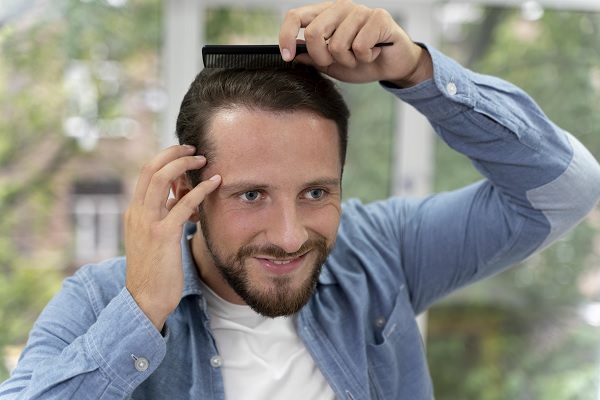
The ultimate compliment for a surgeon is when no one notices the surgery. Therefore, a natural looking hair transplant depends entirely on the initial hairline design. This process begins with a conversation about the patient’s goals and expectations. Furthermore, the surgeon must manage these expectations with honest medical advice.
A natural looking hair transplant avoids the “pluggy” look of the past. By using microscopic dissection, surgeons can ensure that only single hairs are at the front. Furthermore, the distribution of these hairs must appear random yet organized. Consequently, the human eye is fooled into seeing a natural growth pattern.
-
Irregularity: Avoidance of straight lines or geometric shapes.
-
Softness: Creating a diffused edge that mimics a natural shadow.
-
Progression: Moving from low density at the front to high density behind.
-
Integration: Matching the texture and color of the transplanted hair to the original.
Furthermore, a natural looking hair transplant requires the patient to follow strict aftercare instructions. Protecting the new grafts during the first week is essential for survival. Consequently, the patient becomes a partner in the success of the hairline design. This collaboration ensures that the final result remains beautiful for many decades to come.
The importance of temporal peak hairline design
The temporal peaks are the small triangles of hair on the sides of the forehead. These are often overlooked but are essential for a complete hairline design. Furthermore, they help to shorten a wide forehead and frame the eyes. Consequently, neglecting these areas can leave the face looking “top-heavy” or unfinished.
Restoring these peaks requires extreme delicacy and very fine hair. Because the hair here is naturally thinner, the surgeon must choose the grafts carefully. Furthermore, the angle of growth is almost flat against the skin in this region. Therefore, the technical challenge of this area is significantly higher than the center.
-
Vertical Height: Aligning the peak with the outer corner of the eye.
-
Projection: Ensuring the peak points toward the temple correctly.
-
Softness: Using only the finest vellus-like hairs for the edges.
-
Flow: Blending the peak into the sideburns and the main hairline.
Furthermore, a well-executed temporal peak enhances the overall hairline design. It creates a cohesive frame that looks natural even when the hair is pulled back. Consequently, patients should look for surgeons who demonstrate expertise in this specific sub-specialty. It is the final touch that makes a transplant truly world-class.
Future trends in hairline design and technology
The field of hair restoration is constantly evolving with new tools and theories. Furthermore, robotic systems are becoming more common in the extraction of donor grafts. Consequently, the speed and accuracy of hairline design are reaching new heights. However, the artistic placement still requires a human eye and hand.
We are also seeing a rise in the use of regenerative medicine. For instance, PRP and stem cell therapies can help support the new hairline design. These treatments improve graft survival and speed up the healing process. Therefore, the future of restoration is a blend of high-tech surgery and biological support.
In addition, virtual reality is starting to play a role in the consultation process. Patients can now see a 3D preview of their hairline design before the surgery. Consequently, this reduces anxiety and helps the patient feel more involved in the plan. This transparency is a wonderful development for the entire industry.
Frequently asked questions
What are the most common mistakes made during hairline design?
The most frequent error is placing the hairline too low on the forehead. While patients often want to look eighteen again, a low line rarely ages well. Furthermore, a line that is too straight creates a synthetic appearance that is easily spotted. This “wall of hair” effect lacks the soft transition zones found in nature. Another mistake is ignoring the temporal peaks on the sides of the face.
Consequently, the face can look unbalanced or unnaturally wide after the procedure is finished. Surgeons must also avoid using multi-hair grafts in the very first row. This results in a “pluggy” look that is very difficult to correct later. Therefore, careful planning and artistic execution are necessary to avoid these common aesthetic pitfalls. A master surgeon will always prioritize a natural, age-appropriate look over an aggressive and low placement.
How long does it take for a hairline design to look final after surgery?
Patience is a vital part of the recovery process for any hair transplant patient. After the procedure, the newly transplanted hairs will actually fall out within a few weeks. Furthermore, this is a normal part of the hair cycle called “shock loss.” Consequently, the patient will look similar to their pre-op state for several months. Around month four, the new hairs will begin to sprout from the scalp.
They often start as very fine, thin hairs that gradually thicken over time. By month six or eight, the hairline design begins to take a visible shape. However, the final density and texture are usually not realized until a full year has passed. Therefore, you should wait at least twelve to eighteen months before judging the final aesthetic outcome. Your surgeon will monitor your progress during follow-up appointments to ensure everything is growing correctly.
Can a previous bad hairline design be fixed with a second surgery?
Fortunately, modern techniques make it possible to correct many unsatisfactory results from the past. A corrective procedure often involves removing large, “pluggy” grafts from the front row. Furthermore, these hairs can sometimes be recycled and placed more naturally further back. The surgeon will then create a new, softer transition zone using fine FUE grafts.
This process requires a high level of skill because the scalp may have some scarring. Consequently, the goal is to camoflauge the old work while building a fresh hairline design. In some cases, laser hair removal might be used to clear an area before new grafts are added. Therefore, you should seek out a specialist who has extensive experience in “repair” cases. While these procedures are complex, they can significantly improve a patient’s confidence and appearance. It is never too late to strive for a more natural look.
Is hairline design different for women than it is for men?
Yes, the fundamental shapes used for male and female patients are quite different. For instance, a feminine hairline is typically more rounded and sits lower on the forehead. Furthermore, women rarely experience the deep receding corners that are common in male pattern baldness. Consequently, the goal for women is often to lower a naturally high forehead or increase density.
The temporal peaks in women are also softer and more integrated into the overall curve. Therefore, a surgeon must adapt their hairline design strategy based on the gender of the patient. In addition, the hair angles in female transplants are often more varied to allow for different styling options. While the technical tools like FUE are the same, the artistic vision must be gender-specific. This ensures that the result enhances the natural beauty and proportions of a woman’s face. Proper design is just as critical for female patients as it is for men.