

Hair cloning, also known as hair follicle cloning or hair multiplication, is an experimental treatment aimed at combating hair loss. While traditional hair transplant procedures involve redistributing existing hair follicles from one area of the scalp to another, hair cloning seeks to multiply hair follicle cells in a lab and then implant them back into the scalp. Here’s an overview of the current state of this technology:
How hair cloning works
Hair cloning is a cutting-edge, experimental approach to treating hair loss that focuses on replicating hair follicle cells outside the body to regenerate new hair. Here’s a detailed breakdown of how it works:
1. Cell harvesting
- A small biopsy of hair follicles is taken from the patient, typically from the back or sides of the scalp (areas less affected by hair loss).
- These hair follicles contain dermal papilla cells (key in hair growth) and other follicular components necessary for hair production.
2. Cell isolation and culturing
- The harvested follicles are processed in a laboratory to isolate the hair-producing cells (e.g., dermal papilla cells).
- These cells are placed in a specialized growth medium to multiply in culture, producing millions of cells from a small initial sample.
3. Reimplantation
- Once a sufficient number of cells has been grown, they are reintroduced into the scalp.
- The cells can be injected directly into balding areas or combined with existing follicles to stimulate the growth of new hair.
- The goal is for these implanted cells to regenerate new, healthy hair follicles capable of producing natural hair.
4. Monitoring and growth
- After implantation, the new follicles should integrate into the scalp and begin producing hair. This process can take months to observe visible results, as hair grows in cycles.
- Long-term success requires monitoring to ensure that the new follicles remain healthy and continue producing hair.

Potential benefits
Hair cloning has the potential to revolutionize the treatment of hair loss by overcoming many of the limitations of current therapies. Here are the key potential benefits of hair cloning:
1. Unlimited donor supply
- In traditional hair transplant procedures, hair follicles are taken from areas of the scalp with dense growth (donor areas). These donor areas can become depleted, especially in individuals with extensive hair loss.
- Hair cloning multiplies hair-producing cells in a lab, theoretically providing an unlimited source of follicles, making it viable for individuals with limited donor hair.
2. Natural hair growth
- Cloned hair follicles are derived from the patient’s own cells, ensuring that the resulting hair matches the natural texture, color, and growth patterns of their existing hair.
- This leads to a more natural-looking restoration compared to wigs or artificial implants.
3. Suitable for severe hair loss
- Traditional transplants may not work for individuals with severe androgenetic alopecia or scarring alopecia due to insufficient donor hair.
- Hair cloning could help these patients by creating new hair follicles that can be implanted in bald areas.
4. Long-lasting results
- The implanted cloned follicles are expected to behave like natural follicles, cycling through phases of growth, rest, and shedding.
- This could offer permanent solutions compared to temporary treatments like medications or PRP therapy.
5. Personalized treatment
- Since the cells used in cloning come directly from the patient, there is minimal risk of immune rejection or incompatibility, unlike donor hair transplants from another individual.
- This also reduces potential side effects, making it a biocompatible and safe option.
6. Enhanced efficiency
- Hair cloning could make the hair restoration process more efficient, as a small number of harvested follicles can potentially generate millions of new ones.
- This reduces the need for extensive surgical procedures and allows for treating larger areas of baldness in fewer sessions.
7. Versatility across hair loss types
- Cloned hair follicles may be used to address a variety of hair loss conditions, including:
- Male and female pattern baldness
- Alopecia areata (autoimmune-related hair loss)
- Trauma-related hair loss (e.g., burns or scars)
- Eyebrow or beard restoration
8. Reduced dependency on ongoing treatments
- Current medications like finasteride and minoxidil require lifelong use to maintain results.
- Hair cloning could provide a one-time or long-term solution that reduces the need for ongoing maintenance treatments.
Although these benefits are highly promising, it is essential to note that hair cloning is still in the research phase, and widespread clinical use is not yet available. As technology progresses, these potential benefits could soon become reality, offering hope to millions dealing with hair loss.
Current challenges
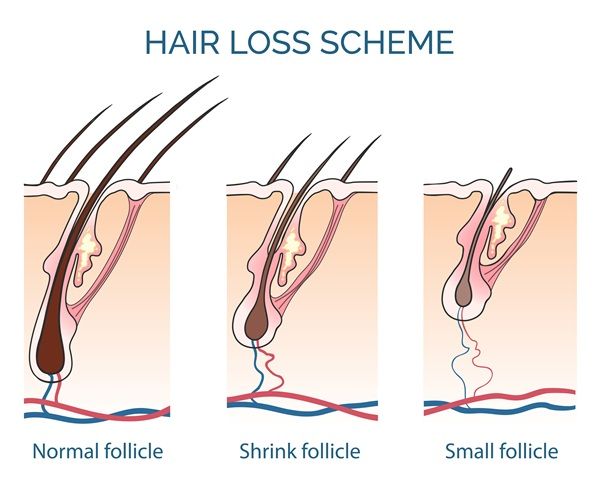
While hair cloning holds significant promise as a treatment for hair loss, it is still in the experimental phase due to several scientific, technical, and practical challenges. Here are the current challenges:
1. Replicating functional hair follicles
- Complexity of hair follicles: Hair follicles are intricate structures made of multiple cell types that must interact precisely to grow hair.
- Difficulty in lab culturing: While dermal papilla cells (responsible for hair growth) can be multiplied in a lab, ensuring these cells retain their hair-producing capabilities and function properly after implantation is challenging.
2. Consistency of results
- Variability: Some studies show inconsistent outcomes where cloned cells fail to form fully functional follicles or produce only fine, non-terminal (vellus) hair.
- Lack of predictability: Scientists struggle to ensure that every implanted cell reliably integrates into the scalp and grows natural, long-lasting hair.
3. Implantation challenges
- Integration into scalp: Even when cells are successfully cloned, ensuring they are implanted in a way that allows them to integrate seamlessly into the scalp tissue is difficult.
- Angling and direction: New hair must grow in the correct direction and angle to look natural, which adds complexity to the procedure.
4. Hair growth cycles
- Inducing cycles: Hair follicles naturally go through growth (anagen), rest (telogen), and shedding (catagen) phases. Ensuring cloned follicles follow these cycles consistently is still under study.
- Longevity of follicles: There is no guarantee that cloned follicles will continue to produce hair for the same lifespan as natural follicles.
5. Immune response
While the cells used in cloning are derived from the patient, unexpected immune responses or inflammation could still occur, potentially harming the implanted follicles.
6. Scalability
- Cost and resources: Culturing hair follicle cells on a large scale requires highly specialized equipment, personnel, and time, making it expensive.
- Mass production: Translating lab results to practical, scalable clinical treatments is a major obstacle for widespread adoption.
7. Ethical and regulatory hurdles
- Approval processes: As a cutting-edge treatment, hair cloning must undergo rigorous clinical trials and meet stringent regulatory standards before being approved for widespread use.
- Ethical concerns: Some might raise concerns about manipulating human cells in lab environments, especially if stem cells or genetic modification are involved.
8. Cost
Early adoption of hair cloning technology is likely to be prohibitively expensive, limiting access for most patients until the procedure becomes more widespread and efficient.
9. Limited clinical trials
Current progress is restricted to a few research labs and biotech companies. Few human trials have been conducted, and large-scale studies are needed to assess safety, efficacy, and long-term outcomes.
10. Time to market
Even with ongoing advancements, hair cloning may take several years to decades to become a viable commercial option due to the complexity of development and regulatory approval processes.
While these challenges are significant, advancements in biotechnology, tissue engineering, and regenerative medicine hold promise for overcoming these obstacles. Scientists continue to refine techniques, and successful breakthroughs could pave the way for hair cloning to become a revolutionary solution for hair loss.

State of research
The state of research on hair cloning is advancing steadily, though the technology is still in the experimental phase. Researchers and biotech companies are actively working to overcome the technical and biological hurdles. Here’s an overview of the current progress and efforts in hair cloning research:
1. Preclinical success
Lab culturing of hair follicles:
- Researchers have successfully cultured dermal papilla cells (key hair growth cells) in laboratory environments.
- In some studies, these cultured cells have demonstrated the ability to stimulate hair growth when implanted into the skin of mice or other models.
- Advances in 3D culturing techniques have improved the ability of these cells to interact and form hair follicles.
2. Ongoing clinical trials
- Some companies and research institutions are conducting clinical trials to test the safety and efficacy of hair cloning in humans.
- Early human trials have shown mixed results, with some success in stimulating hair growth but challenges in consistency and scalability.
- Examples of companies involved in trials:
- RepliCel Life Sciences: Developing methods to inject dermal sheath cup cells to regenerate hair follicles.
- Tsuji Laboratory (RIKEN Institute): Working on bioengineered hair follicle generation using stem cells.
3. Advances in technology
- 3D Bioprinting:
- Emerging technologies like 3D bioprinting are being explored to create hair follicle structures.
- This method aims to replicate the complex arrangement of cells required for functional hair follicles.
- Stem cell research:
- Some researchers are investigating the use of induced pluripotent stem cells (iPSCs) to generate hair follicles. These cells can be programmed to become any type of cell, including those needed for hair growth.
4. Focus on dermal papilla cells
- A significant focus has been on dermal papilla cells, which play a critical role in regulating hair growth.
- Scientists have developed improved techniques to grow these cells in lab settings while preserving their ability to form hair follicles.
- Research aims to maintain their “three-dimensional environment,” as this structure enhances their functionality.
5. Animal studies
- Most success has been observed in animal studies, where lab-grown follicle cells have been implanted into mice, resulting in new hair growth.
- Translating these findings to human subjects remains a challenge due to the complexity of human scalp tissue and hair follicle biology.
6. Collaboration between research institutes and biotech firms
- Institutions like RIKEN (Japan) and companies like HairClone (UK) are collaborating to accelerate progress.
- These partnerships aim to combine academic research with commercial resources to bring hair cloning closer to clinical applications.
7. Ethical and regulatory preparations
- Researchers are working to address ethical concerns and prepare for the regulatory approval process.
- Since hair cloning involves cell culture and potential stem cell manipulation, it must meet strict safety and efficacy guidelines before becoming a commercially available treatment.
8. Timeline for availability
- While promising progress is being made, experts estimate that hair cloning may take another 5 to 15 years to become a widely available clinical treatment.
- This timeline depends on resolving technical challenges, successful clinical trials, and obtaining regulatory approvals.
Alternatives in the meantime
While hair cloning remains in development, there are several proven and widely available alternatives for managing hair loss. These treatments range from non-invasive options to surgical procedures and are tailored based on the type and extent of hair loss. Here’s an overview of the alternatives available in the meantime:
1. Medications
a. Minoxidil (Rogaine)
- How it Works: A topical solution or foam that stimulates blood flow to hair follicles, prolonging the growth phase of hair.
- Effectiveness: Best for mild to moderate hair thinning and early-stage hair loss.
- Usage: Requires daily application; results typically take 3–6 months.
- FDA Approval: Approved for both men and women.
b. Finasteride (Propecia)
- How it Works: An oral medication that blocks the conversion of testosterone into dihydrotestosterone (DHT), a hormone linked to hair follicle shrinkage.
- Effectiveness: Effective for male pattern baldness, especially at the crown and mid-scalp.
- Limitations: Approved only for men; potential side effects include decreased libido and erectile dysfunction.
c. Dutasteride
- How it Works: Similar to finasteride but inhibits DHT more effectively.
- Usage: Often used off-label for hair loss but can provide better results for individuals resistant to finasteride.
2. Surgical hair restoration
a. Follicular unit transplantation (FUT)
- Procedure: A strip of skin with healthy hair follicles is removed from the donor area (typically the back of the head) and transplanted to balding areas.
- Advantages: Suitable for covering large areas; yields high-quality grafts.
- Limitations: Leaves a linear scar in the donor area.
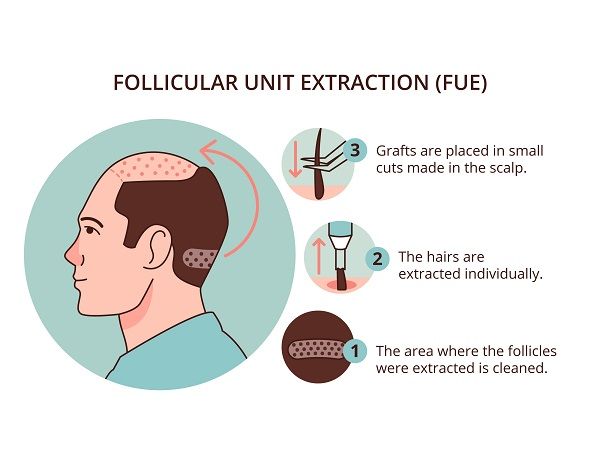
b. Follicular Unit Extraction (FUE)
- Procedure: Individual hair follicles are extracted from the donor area and implanted into balding areas.
- Advantages: Minimally invasive, no linear scar; shorter recovery time.
- Limitations: Time-consuming; may require multiple sessions for extensive hair loss.
c. Scalp micropigmentation (SMP)
- Procedure: A cosmetic tattooing technique that replicates the appearance of a shaved head or fuller hair density.
- Advantages: Non-surgical and relatively quick; suitable for all types of hair loss.
- Limitations: Does not restore actual hair.
3. Non-surgical therapies
a. Platelet-rich plasma (PRP) therapy
- How it Works: Blood is drawn, processed to concentrate platelets, and injected into the scalp to stimulate hair growth.
- Effectiveness: Can improve hair density and thickness for individuals with early hair loss.
- Frequency: Requires multiple sessions; maintenance treatments may be needed.
b. Low-level laser therapy (LLLT)
- How it Works: Uses laser devices or LED light to stimulate hair follicles and improve blood circulation in the scalp.
- Effectiveness: Works best for early-stage hair loss or as an adjunct to other treatments.
- Devices: Available as combs, caps, or helmets for home use.
4. Lifestyle changes and supplements
a. Diet and nutrition
- Ensuring a balanced diet rich in vitamins (B7, D, E), minerals (zinc, iron), and protein supports hair health.
- Supplements like biotin, collagen, or omega-3 fatty acids may help improve hair quality.
b. Stress management
Chronic stress can trigger hair loss (e.g., telogen effluvium). Techniques like meditation, exercise, or therapy may reduce hair fall.
5. Hair care products
a. Thickening shampoos and conditioners
- Contain ingredients like keratin and biotin to create the appearance of thicker hair.
- While they do not stop hair loss, they can improve the look of thinning hair.
b. Hair fibers
Temporary solutions like keratin-based hair fibers can mask thinning areas and provide a fuller appearance.
6. Hairpieces and wigs
- High-quality wigs or hairpieces provide an immediate solution for individuals with significant hair loss.
- Options include synthetic or natural hair, customized for a natural look.
7. Holistic and alternative therapies
Some individuals explore alternative options like essential oils (e.g., rosemary oil), acupuncture, or herbal remedies. While these may help some people, their efficacy is not always scientifically proven.
8. Combination treatments
Many individuals benefit from a combination of treatments, such as using minoxidil alongside PRP therapy or combining hair transplants with ongoing medication.
Considerations when choosing an alternative
- Type of hair loss: Some treatments work better for specific types of hair loss (e.g., androgenetic alopecia vs. telogen effluvium).
- Extent of hair loss: Surgical options may be ideal for advanced hair loss, while medications or PRP are better for early stages.
- Budget: Non-surgical treatments are generally more affordable than surgical procedures.
- Commitment: Some treatments require ongoing use (e.g., minoxidil) or regular sessions (e.g., PRP).
If you’re considering one of these options, consulting a dermatologist or hair restoration specialist can help you determine the most suitable treatment for your needs.
Pingback: URL