
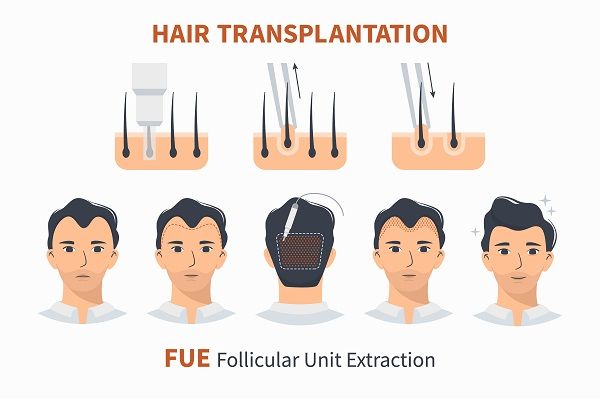
Body Hair Transplant (BHT) or Body Hair to Head Transplant (BHHT) is a hair restoration method that uses the Follicular Unit Extraction (FUE) technique, which is a stitch-free method. Unlike traditional hair transplantation where the donor area is the back of the scalp, BHT uses hair from other parts of the body such as the beard, chest, back, stomach, legs, or arms. These hair grafts are then transplanted onto the balding areas of the head.
This technique is typically used for individuals with extreme baldness who have little to no reserve or thin hair at the back of the scalp. It offers a solution for those with severe hair loss, such as Type VI and Type VII. It can be used in combination with traditional scalp hair transplantation to achieve a more natural and full appearance. For more insights, including celebrity experiences, check out this link.
Difference between scalp hair and body hair
Diameter: Scalp hair is usually thinner in diameter than body hair. This is because scalp hair is exposed to more environmental factors that can affect its diameter.
Transplant success rate: Scalp hair is considered to be a better option for hair transplantation because it has a higher success rate of around 90-95% and a more natural-looking result compared to body hair.
Maintenance: Scalp hair may require more maintenance, such as regular haircuts and trims, to keep it looking healthy and well-groomed. Body hair, on the other hand, may not require as much maintenance.
Aging: Scalp hair tends to thin and gray with age, while body hair may retain its thickness and color for longer. This is due to the fact that scalp hair is exposed to more environmental factors that can affect its color and thickness.
Growth cycle: Scalp hair has a growth cycle of 2-7 years, whereas body hair has a growth cycle of 3-12 months. This is because scalp hair goes through more cycles of growth and rest than body hair, which allows it to grow longer.
It’s important to note that these generalizations might not apply to everyone, and there can be variations in hair characteristics among individuals and also body hair characteristics can be different based on the body area it’s taken from.
Advantages of body hair transplant

One of the benefits of body hair transplantation is that the transplanted hair will mimic the native hair growth pattern and density of the surrounding hair on the scalp. This helps to create a more natural and seamless transition between the transplanted and existing hair.
Body hair transplantation can also be used to restore hair on other parts of the body, such as the beard or chest. This technique can be used to add density and fullness to these areas, creating a more masculine or youthful appearance.
No linear scarring: Unlike traditional strip methods, FUE leaves no linear scarring, giving more flexibility with hairstyles. This can be beneficial for those who want to keep their hair short or shave their head, as it eliminates the need to hide a linear scar.
It’s important to note that the best course of action may vary from person to person, and it’s always a good idea to consult with a hair specialist before making a decision. A hair specialist will be able to evaluate your individual case and recommend the best course of treatment for your specific needs. They will also be able to advise on the expected results, recovery time, and any potential risks or side effects associated with the procedure.
Limitations of body hair transplantation to scalp

Body hair transplantation to the scalp is a hair restoration technique that uses hair from other parts of the body, such as the chest or legs, to increase the density of hair on the scalp. This technique has not been studied and researched as extensively as transplantation from a scalp donor area. Therefore, it should be considered as a last resort when other techniques are not effective.
One limitation of body hair transplantation is that the survival rate is lower compared to other transplant procedures. Additionally, after being transplanted to the scalp, it is observed that the body hairs change their structure to adapt to the head hair, becoming longer and straighter.
Individuals considering body hair transplantation to the scalp should understand that this treatment is done as a final effort to restore hair on the scalp, and the progress could be unpredictable. Therefore, before opting for body hair transplantation to the scalp, it is highly recommended to consult with a dermatologist and hair specialist to discuss the procedure in detail and consider all the possible options.
Indications for body hair transplant to scalp

Body Hair Transplant (BHT) to the scalp is a hair restoration technique that uses hair from other parts of the body, such as the chest or legs, to increase the density of hair on the scalp. This technique is typically used for individuals with an advanced grade of hair loss with limited scalp donor follicles and a good beard or torso hair. The indications for BHT to the scalp include:
- Individuals with an advanced grade of hair loss with limited scalp donor follicles and having a good beard or torso hair.
- History of previous hair restoration surgeries that have resulted in depletion of scalp donor areas and inadequate coverage of recipient areas.
- To combine it with a regular scalp transplant to augment the coverage, thus achieving a higher density of hair that is difficult otherwise, given the limitation of grafts that can be extracted from the scalp in one sitting.
- For camouflaging donor scars.
- Extensive scarring alopecia of the scalp (example: as seen in burns), where the scalp donor area is inadequate.
It’s important to note that BHT to the scalp is not suitable for everyone, and it is highly recommended to consult with a hair specialist before making a decision. A hair specialist will be able to evaluate your individual case and recommend the best course of treatment for your specific needs. They will also be able to advise on the expected results, recovery time, and any potential risks or side effects associated with the procedure.
Frequently asked questions
What is a body hair transplant?
A body hair transplant is a surgical procedure that involves the extraction of hair follicles from various body parts and their implantation in areas of hair loss. This technique is particularly useful for individuals with insufficient donor hair on their scalp. The procedure is similar to traditional hair transplants but utilizes body hair, which can be an excellent source for restoration. Surgeons carefully select and extract hair follicles to ensure a natural appearance post-transplant.
Who is a good candidate for a body hair transplant?
Good candidates for a body hair transplant typically include individuals with significant hair loss who lack adequate donor hair on their scalp. Men and women experiencing hair thinning or bald patches can benefit from this procedure. Additionally, those who have undergone previous hair transplants may also consider body hair for added coverage. A thorough consultation with a qualified surgeon will help determine if this option suits your specific needs.
How does the body hair transplant procedure work?
The body hair transplant procedure generally follows a few key steps. First, the surgeon performs a consultation to assess the patient’s hair loss and identify suitable donor areas. Afterward, the extraction of hair follicles occurs using either FUE (Follicular Unit Extraction) or FUT (Follicular Unit Transplantation) methods. The harvested hair follicles are then prepared for transplantation into the recipient area. Finally, the surgeon meticulously implants the follicles to ensure a natural hair growth pattern.
What can I expect during recovery?
Recovery after a body hair transplant varies from patient to patient, but there are common experiences. Initially, patients may experience some swelling, redness, and discomfort in both the donor and recipient areas. Pain medications and anti-inflammatory drugs can help manage any discomfort. Most individuals can return to normal activities within a few days, but it’s advisable to avoid strenuous exercises for about two weeks. Full recovery and visible results can take several months, as hair growth varies.
Are there any risks or side effects associated with the procedure?
As with any surgical procedure, a body hair transplant carries potential risks and side effects. Common side effects include swelling, redness, and minor discomfort in the treated areas. In rare cases, patients may experience infection, scarring, or poor hair growth. Choosing a skilled and experienced surgeon significantly reduces these risks. A detailed consultation will help outline potential complications and how to mitigate them.
How long do the results last?
Results from a body hair transplant can be long-lasting, often providing a permanent solution to hair loss. The transplanted hair follicles typically continue to grow in their new location, similar to their original site. However, it’s important to note that natural hair loss may still occur in other areas, so ongoing maintenance may be necessary. Adopting a healthy lifestyle and following post-operative care can enhance the longevity of the results.
Can body hair be used for beard or eyebrow transplants?
Yes, body hair can be effectively used for beard and eyebrow transplants. Many individuals seeking fuller facial hair or defined eyebrows have found success with body hair transplants. The technique allows surgeons to select the most suitable hairs to match the desired appearance. This versatility makes body hair transplants a popular choice for those looking to enhance their facial features.
What is the cost of a body hair transplant?
The cost of a body hair transplant can vary widely based on several factors, including the surgeon’s expertise, the clinic’s location, and the complexity of the procedure. On average, prices can range from $3,000 to $10,000 or more. It’s essential to consult with different providers to understand the cost structure and what is included in the package. Many clinics offer financing options to make the procedure more accessible.
Is the body hair transplant procedure painful?
Patients often report minimal pain during the body hair transplant procedure, thanks to local anesthesia administered before the surgery. The use of advanced techniques, such as FUE, tends to minimize discomfort. Post-operative pain may occur, but it can usually be managed with prescribed medications. Overall, the majority of patients find the discomfort manageable compared to the benefits of restored hair.