

Sleeping with wet hair can be a challenge, but it’s not impossible to wake up with gorgeous, healthy-looking hair. With the right techniques, you can reduce frizz, prevent breakage, and wake up with beautiful locks. In this article, we’ll explore some tips and tricks for sleeping with wet hair. Caring for wet hair is crucial for maintaining its health and shine. When your hair is wet, it becomes more vulnerable to damage. This is the ideal time to incorporate effective hair care practices. By following the right techniques, you can prevent breakage and split ends, ensuring your strands remain strong and vibrant. For optimal hair health, consider exploring the role of nutrition in hair growth by visiting this link.
Understanding how to care for wet hair can significantly impact its overall appearance and longevity. Many people overlook the importance of proper drying and styling methods. Wet hair requires gentle handling to avoid unnecessary stress. With a few essential tips, you can transform your wet hair routine into a nurturing experience that promotes healthy strands and reduces damage.
Using a microfiber towel

When it comes to drying wet hair, using a regular towel can cause friction and damage to your hair. A microfiber towel is a better option as it is gentle on your hair and absorbs water quickly. Microfiber towels are made of tiny fibers that are smaller than a strand of human hair. These fibers have a unique structure that allows them to absorb water quickly without causing friction or damage to your hair.
To use a microfiber towel, gently squeeze your wet hair to remove excess water. Then, wrap the microfiber towel around your hair and gently press it against your head. Avoid rubbing your hair with the towel as this can cause friction and damage your hair. Instead, gently press the towel against your hair to absorb the excess water.
Using a leave-in conditioner

Sleeping with wet hair can make your hair prone to breakage, especially if you toss and turn while you sleep. To protect your hair, it’s important to use a leave-in conditioner before going to bed. A leave-in conditioner can help keep your hair moisturized and healthy while you sleep.
There are different types of leave-in conditioners available on the market, including sprays, creams, and serums. To use a leave-in conditioner, start by towel-drying your hair to remove excess water. Then, apply a small amount of the conditioner to your hair, focusing on the ends. Avoid applying the conditioner to your roots as this can make your hair greasy.
Use a wide-tooth comb to distribute the conditioner evenly throughout your hair. Avoid using a regular brush as this can cause breakage and damage to your hair. Once you’ve applied the leave-in conditioner, you can either let your hair air dry or blow-dry it using a low heat setting.
Choosing the right pillowcase
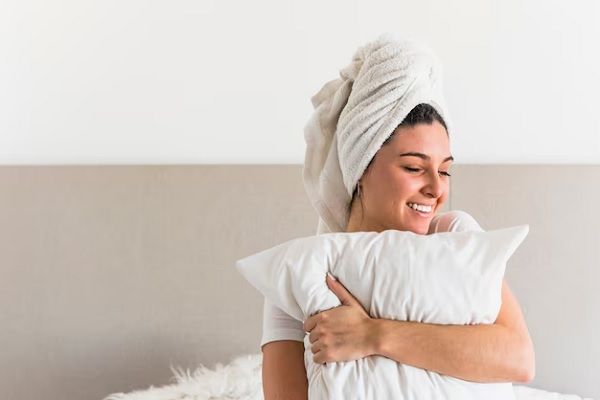
The type of pillowcase you use can affect the health of your hair. Cotton pillowcases can cause friction and create tangles, leading to breakage and frizz. Silk pillowcases, on the other hand, are gentle on your hair and don’t cause friction. Silk pillowcases can also help keep your hair moisturized by reducing the absorption of natural oils from your hair.
When choosing a pillowcase, look for a high-quality silk pillowcase that is soft and comfortable to sleep on. Silk pillowcases are available in different grades, with 6A being the highest quality. A 6A grade silk pillowcase is made of 100% pure mulberry silk and is hypoallergenic, breathable, and gentle on your hair and skin.
You can also try using a satin pillowcase if silk isn’t available. Satin pillowcases are also gentle on your hair and can reduce friction and breakage. Avoid using pillowcases made of polyester or other synthetic materials as they can cause friction and damage to your hair.
Avoiding tight hairstyles

As mentioned earlier, tight hairstyles can cause damage and breakage when sleeping with wet hair. Tight hairstyles such as braids, buns, or ponytails can pull on your hair, causing stress and breakage. Instead of tying your hair tightly, try to let your hair air dry naturally or loosely braid it to keep it out of your face. If you prefer to have your hair up, try a loose bun or ponytail. Make sure not to tie your hair too tightly, as this can cause breakage and tangles.
Another option is to use hair clips to secure your hair instead of tying it tightly. Hair clips are gentler on your hair and can help keep your hair in place without causing damage or breakage. If you must use a hair tie, opt for a soft, fabric-covered elastic band, such as a scrunchie, instead of a regular elastic band or hair tie. This will help prevent breakage and damage to your hair.
Using a hair turban or scrunchie
Using a hair turban or scrunchie can help keep your hair in place while you sleep, without causing damage or breakage. A hair turban is a soft, absorbent cloth that you wrap around your head to keep your hair in place while you sleep. It’s a great way to reduce frizz and keep your hair in place. To use a hair turban, simply wrap it around your head and tuck the end in at the nape of your neck. You can also twist your hair up into the turban for added security.
A scrunchie is a soft, fabric-covered elastic band that is gentle on your hair. You can use it to tie your hair up in a loose bun or ponytail before going to bed. Avoid using regular elastic bands or hair ties, as they can cause breakage and damage to your hair. To use a scrunchie, simply gather your hair into a loose bun or ponytail and wrap the scrunchie around it once or twice, leaving it loose to avoid pulling on your hair.
Frequently asked questions
How does wet hair become damaged?
Wet hair is more susceptible to damage due to its structural changes when soaked. The hydrogen bonds in hair weaken when exposed to water, making it less elastic and more prone to breakage. Factors like rough towel drying and vigorous brushing can exacerbate these issues. Using heat tools on wet hair also poses a significant risk. It’s essential to treat wet hair delicately to maintain its integrity.
What are the best ways to dry wet hair?
The best way to dry wet hair is by using a soft microfiber towel. Gently squeeze out excess water without rubbing or pulling. Avoid traditional towels, as they can create friction and lead to frizz. Allow your hair to air dry whenever possible, as this is the least damaging method. If you need to use a blow dryer, opt for the cool setting and keep it at a distance. This minimizes heat damage while effectively drying your strands.
Is it safe to brush wet hair?
Brushing wet hair can be risky, as it is more fragile in its wet state. If you need to detangle, use a wide-tooth comb instead of a brush. Start from the ends and work your way up to the roots to avoid unnecessary tension. Additionally, apply a leave-in conditioner or detangling spray to make the process smoother. This helps reduce breakage and keeps your hair looking healthy.
Can I use hair products on wet hair?
Yes, applying hair products on wet hair is often beneficial. Many leave-in conditioners, serums, and styling creams work best when the hair is damp. This allows for even distribution and better absorption. However, be cautious with the amount you use. Overloading your hair with products can lead to buildup and greasiness. Always choose products suited for your hair type to achieve the best results.
How often should I wash my hair if it’s often wet?
The frequency of washing your hair depends on your hair type and lifestyle. For oily hair, washing every day might be necessary, while dry or curly hair may only need washing once or twice a week. Over-washing can strip natural oils, leading to dryness and damage. Assess your hair’s needs and adjust your washing routine accordingly to maintain optimal health.
What should I avoid doing with wet hair?
Several practices can harm your hair when it’s wet. Avoid towel-drying aggressively, as this creates friction that can lead to frizz and breakage. Don’t use heat styling tools on wet hair; always ensure your hair is completely dry before styling. Additionally, try to avoid tight hairstyles when your hair is wet, as this can cause unnecessary tension and lead to hair loss over time.
How does humidity affect wet hair?
Humidity can significantly impact wet hair, often leading to frizz and loss of style. When the air is humid, moisture from the environment can seep into the hair’s cuticle, causing it to swell. This results in a frizzy appearance. To combat this, use anti-frizz products and consider styling your hair when it’s less humid. Protecting your hair from excess moisture in the air can help maintain a polished look.
Are there any benefits to letting hair dry naturally?
Yes, letting your hair dry naturally has several benefits. Air drying reduces the risk of heat damage caused by blow dryers and other styling tools. It also allows your hair to retain moisture, which can help keep it hydrated and healthy. Additionally, natural drying can enhance your hair’s texture, making it look more vibrant and full of life. Whenever possible, embrace air drying as part of your hair care routine.
What is the best way to protect wet hair during sleep?
To protect wet hair while you sleep, consider using a silk or satin pillowcase. These materials create less friction, reducing the risk of breakage. Additionally, loosely braid your damp hair or put it in a loose bun to minimize tangling. Avoid using tight hair ties, which can lead to stress on wet hair. Following these steps can help preserve your hair’s health and appearance while you sleep.